Thursday, February 19

Jack's Beanstalk of Anti-Heroism

Beans are a magical fruit, as the immature song tells us. Full of protein and complex carbs, they can be used in anything from a simple appetizer to a hearty soup—even a delicious brownie. And while they're easy to grow, none are as cool as Jack's. They're his ticket to a new life. Without the gimmick of his magic beans, Jack would still be a down-on-his-luck farmer's son.

Or the village criminal, who sneaks in through your back door to “borrow a cup of sugar.” Your call, young writer.

Jack needs the beans, though, to make his story work. Most fairy tales can be told without the magic. Countless revisions of classic favorites attest to that. Jack without his beans equals a kid with his hand in the cookie jar. If he's going to sell anyone his ocean-view resort in Nebraska—I mean, his story about how a nobody broke into a fabled, wealthy kingdom—he must dazzle the audience.

If Jack were to simply say that his family needed the money and he took up a life of crime to help his ailing mother, it would read more like the Michael Keaton crime spoof Johnny Dangerously. Funny, but still wrong. And Jack wants your good opinion, so that's not a venue that works for him.

A recent story that mimics Jack's story pretty well is the film 21. Our Jack, Ben, is asked to “dazzle” a prospective employer in an interview, so he spins a tale. He is a wanted criminal, who pinned all his crimes on the man who first dragged him off the straight-and-narrow. A double life, between his normal life at MIT and his wild one in Vegas. A beautiful girl out of his league. A twist at the end, as Ben works to outsmart powerful con men.

And all the cooler, because it's a true story.

Anti-heroes have been making the rounds a lot in current fiction. Some writers think “good guys” are boring. Some writers think there's no such animal as a genuinely good person. Some writers identify more with the antagonists. All of these writers must then jump through hoops to convince the reader to side with their anti-heroic protagonists.

This is where your spin control comes into play, young writer. You are not required to make a protagonist all good. Nor must you trick your reader into loving an anti-hero. But you should be well aware of what you are doing, and know what tricks are at your disposal.

Human nature can be deceived by looks, so if you have a man who is rich and good-looking, your reader will excuse him for a multitude of sins. Yes, really. The Harry Potter fans who love Draco Malfoy. The girls who swooned over a certain sparkly vampire. And even the Jews, who wanted a human king instead of divine governance, who liked Saul for his great height and mafia-like family connections (I Samuel 9 and 10).

If wealth and looks seem too cliched a way to sway your readers over to the side of your anti-hero, you can put Stockholm Syndrome to good use. This has become a common practice in post-modern story-telling, actually, so don't fear that this will seem far-fetched for your readers. It's a fairly simple process:
1. Capture your reader. Hook the audience on the absolute importance of finding out what happens next. This can occur almost instantly, or it may take a long while. Don't rush the process.

2. Hurt your reader. Whether this is accomplished by harming other characters or by writing a foreign worldview is up to you, but the reader needs to be intimidated and hungry for an emotional connection.

3. Make your reader vulnerable. A desire for an emotional connection is a good start, but it's not enough. The reader needs to open up and share in the hopes that the anti-hero will care. Characters in the story who have been victimized by this character can share their fears, pasts, or dreams in order to facilitate this step.

4. Hurt the reader again. Perhaps there is a misunderstanding, or perhaps the anti-hero hears the sob story but responds in an unexpected way. The vulnerability needs to be reinforced by more damage.

5. Share a little. The anti-hero isn't all bad, and here the reader learns about his abusive childhood or the trauma of prison. One piece of information, painting the anti-hero in a sympathetic light, will attach the reader to him. Or her, if you happen to be writing an anti-heroine.

6. More pain and/or violence. But this time, the characters who have been victims of the anti-hero are now fighting alongside their captor. The reader should be swayed enough to want to defeat “the real villain” rather than escape the captor.


If this sounds cruel or manipulative to you, GOOD. It should. Harming and tricking innocent people takes a lot of work and a certain amoral bent. Modern stories are often developed along these lines, and it has normalized a lot of dangerous behavior in popular culture and fiction.

If you've seen Disney's Frozen, echoes of this can be found in the film. Anna is the fun little girl who wants to play with her sister. Who hurts her. Yes, it's unintentional, but that only increases the audience's sympathy. Anna grows up cut off from her sister, starved for affection and attention. Her sister explodes with icy sorcery, stomping on Anna's fledgling romance and rejecting both family and kingdom. Anna chases her, only to have her sister hurt her again. Anna is desperate to be healed and be loved, and her race home reveals unwelcome news: her sister was right to doubt Anna's suitor. (Anna is unaware of her sister's imprisonment and fears for the family, though the audience is kept up to speed.) Freshly sympathetic to her sister, Anna would rather die defending her than break free of her sister's spell.
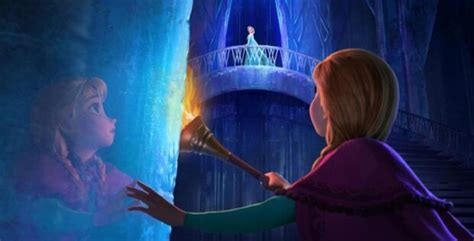
That's a specific, slanted take on the story, I know. It is, however, a retelling that does not mention by name the anti-hero of the story: Elsa. Hans is a bad guy, no doubt, but Elsa is the anti-hero who is spun to be a victim of her own ignorance and just as hungry for love as her little sister. Much like Jack is only trying to save his family, or he never would have robbed (or killed) a giant.

Anti-heroes have their place in story-telling. Sometimes they are necessary because nothing else will work for a story. In spinning a tale so that the anti-hero “gets better,” the author runs the risk of doing something scary: normalizing evil. Jack makes it okay to steal, as long as the victim is already bad. Elsa makes it okay to neglect loved ones, as long as the intent is to protect. The more normal any evil becomes, the farther an author has to reach to find a new edge to that envelope he/she is pushing. Violence, abuse, and outright horror become increasingly gray areas for the reader, the more excuses the writer provides.

Young writer, use your anti-heroes with care. How you weave a story is between you and your conscience, but have a care for what it will open inside the reader. Some of the thoughts you put in your reader's head cannot be unthought.

Keep in mind, Jack isn't all bad. There are sweet and delightful variants of the story, full of his pluck but without his kleptomaniac tendencies. But that's a story for another day...

Monday, January 26

Jack's Beanstalk and ...

When it comes to unique fairy tales, not every nationality has a recognizable trademark. Little Red Riding Hood could happen anywhere. Snow White can't even be claimed by the Brothers Grimm, because the Italians, the Arabs, and the Scots all have multiple takes on the story. Cinderella is best known by the French version, but literally every culture has one. But the English can claim sticky-fingered Jack for their own.

One of the amazing aspects of Jack's story is the very subtle narrative. Jack is young, poor, and not-so-clever. But he is anxious to prove he is quick-witted, at least. The fascinating thing about Jack's adventures up in the sky isn't that they happen. It's that you, young writer, believe this repeat offender when he goes back and steals from the giants. Again and again.

Jack's MO is normal for thieves. If they find a weakness someplace, they will come back and steal again. Just like Jack did. But we excuse him for it, snookered by this notion that he had a family to feed, an astonishing bit of luck in being tricked into buying “magic beans,” and the ultimate whopper of justified revenge. There is always an excuse.

This story is swallowed so completely, especially when we're kids, that we never question whether the narrator is telling the truth.

But why would he? He admits to stealing. Why doesn't the reader wonder if that was his only fault in the tale? Oh, he's plucky. Imaginative. Charming. Altruistic. He's Robin Hood with beans and giants and harps—oh my.

Don't get me wrong. I love a good fairy tale. But Jack's adventures have more in common with Rapunzel than with Cinderella. He's not as innocent as we like to imagine.

How would another character—a disinterested third party—tell the story? Would they side with the giant? Would they know more about where the beans came from? We've spent some time on point-of-view already, so I'm not asking about that. Jack spins the story, though, so that he comes out smelling like roses. It's Midnight in the Garden of Good and Evil. He's the guy who got away with murder, and this is the tall tale he passes around to convince everyone that he did the right thing.

As writers, we learn about protagonists and antagonists. Good and bad. How to give one character a little of both sides. And then we get a “modern” idea—let's have an anti-hero. No one's ever made a bad guy the protagonist, so I'll be the first.

Nyeh—more like the seven hundred and third. If Jack could convince you that his beanstalk was fated justification, perhaps anti-heroes with a gift of gab have existed before.

If you were to make an antagonist the hero, would you convince your readers of his courage? Jack's not written without flaws in the beloved children's tale, but the story defends him at every turn. How would you write an anti-hero, young writer? Would your readers see any of his faults, or would he be more like merry ol' Jack?

Monday, October 13

Twelve Dancing Princesses and a Steamroller

As time winds down, we are left with one last perspective to examine for our besieged father and his stubborn girls: the successful candidate.

Even though this story is a fairy tale about girls who dress up and go dancing every night, the soldier-of-fortune's perspective is the easiest and most familiar choice for a single point-of-view. Of all the people in this story, he is the only dynamic character. (Read here for more on static and dynamic characters.) Nobody else changes. And even the soldier-of-fortune's “change” can be debated.

He is, unarguably, the most interesting of all the characters in the story. Everyone else is stuck in a rut, only digging themselves in deeper with every revolution of the broken record of their lives. The king's tied hands. The eldest princess's schemes. The youngest princess's fears. The soldier-of-fortune at least shakes things up.

As writers, these are the characters we prefer to write about. J. Alfred Prufrock doesn't eat that peach, after all. Walter Mitty's active fantasy life never changes anything (original story, not the recent film). Thoreau, for all his abstract optimism, left Walden Pond because the work of living interfered with his writing. He wrote about the time there, not about his decades of mooching. Brilliant writers may write about “everyman” and his indecision, but most writers and readers would rather follow the adventures of a “doer.”

Just because you, young writer, are telling a story about active conflict does not mean that your character must be active, extroverted, or loud. All of these character traits make for an interesting journey, certainly, but none of them are necessary. What your dynamic characters do need, however, are small OODA loops.

No, I'm not just making this stuff up. Silly rabbits. John Boyd of the US Air Force developed this cycle—Observe, Orient, Decide, Act—to help people find a way to quickly move forward in a situation. Making good use of this concept does require someone to know what information is important and what should be done about it, which takes study and practice, but a strong dynamic character should not be sitting on his hands. Hopefully, he is busy making good decisions, but dynamics are not just about internal changes like a heart growing, or a vengeance coalescing. Dynamic characters need to be functional in active conflicts, too.

For the soldier-of-fortune, his external GMC is easy to spot. Makes good use of his own OODA loop, too. Goal: solve the mystery. Motivation: new job title/NOT getting his head chopped off. Conflict: active hostility from the princesses. Wonderfully straightforward.

The readers' trust in his ability to handle these physical conflicts is based on the internal conflicts he first handles with efficiency and kindness. When he meets the old woman, he does not hesitate to help her. So when her response is to provide him with the wisdom and the tools to take on the princesses, the reader is not surprised that he accepts the help quickly and moves on to his next challenge. Each decision the soldier-of-fortune must make is done with a minimal of dithering. Very small OODA loop for our hero.

Writing from this perspective doesn't require you to study military strategy. The soldier-of-fortune, however, doesn't come with a lot of internal conflict. Writing him with inner demons means dragging out the story, but it also lengthens that OODA loop. Which means you're now writing a different story. Young writer, feel free to write the story on your heart. But let your characters be true to themselves. Not only to the things you already know. You don't have to research yourself to death when writing someone or something new, but making it real is worth the time and effort.

Let your men be men. Soldiers who doubt themselves don't survive long on the battlefield, so they learn to either ignore their internal issues or resolve them to the individual man's satisfaction. Ignoring an unresolved issue can lead to a whole host of other problems, of course, but that's a story for another day...

Wednesday, June 25

Pwyll, Part I: A Reduction of the Peter Principle and Fictional Leadership

Part of the fun of setting up this posit and axiom system is that I get to give the reader the option of writing a response, while at the same time pondering the depth and direction of my own response. It's all fun and games 'til someone pokes her eye out, of course. The difference between real leadership and fictional leadership is that the consequences of success or failure are not as controlled as we writers like to think.

In the real world, poor leadership can be “spun” as innovative, optimistic, or simply the underdog in an epic conspiracy. When this is attempted in fiction, readers tend to notice. Readers think differently about fictional leadership than they do about “real world” issues, for whatever reason. We demand more sense and order in fiction than we do in truth.

But the question asked was what qualifications do you, as a writer, seek in your fictional leaders?

Pwyll is presented as an adult in this story. Young, perhaps, but not inexperienced. We do not read about his childhood or his education, that we could glean training techniques for future would-be leaders. Think about this, though: he cannot have sprung from the ground, fully formed. Prior to demonstrating his potential for leadership, he had to have both learned how to lead and demonstrated his skills to people who wished to be led. (Celtic lordship wasn't passed from father to son—a candidate had to prove himself.)

Young writers, if your kings, lords, chieftains, etc. are not demonstrating leadership skills, you have a problem. You need to make genuine leaders out of your heirs, rebels, upstarts, and politicians. Simply giving them a title and writing in underlings who say “Yes, sir” or “As you command, ma'am” will not grant them any authority. And this does, indeed, weaken the believability of your story.

One does not have to study international politics to write a king, nor does one have to master the twelve steps of Tae Kwon Leap to conquer the hearts and minds of a people (see below). As a writer, you can base your leaders' training and understanding on your own experiences. Most of us do. (Which may be why some “leaders” you meet in fiction don't reveal their plans, assign responsibilities or boundaries, or take responsibility for their actions.) Learn to use what you know for good.


For example, as a child I participated in a leadership training program (similar to Girl Scouts, but more purpose-driven). I didn't realize that's what it was. I just wanted to spend time with friends, working on projects together, and derived a lot of pleasure out of meeting goals that were age-appropriate. But the brilliance of this program was that the girls learned (a) interesting, relevant information, (b) how to teach this information to a peer, (c) practical application of this information in personal philosophy, and (d) how to both serve and lead in this application. Each step of instruction lead to the next, and each new goal built upon what we'd already learned. All of which meant we had a small tribe of organized middle school mafia bosses running rampant in our church.

I know, I know. Duck and cover.

But this prepared me to see leadership as an ongoing training exercise, rather than a horrible and incomprehensible weight dumped on unsuspecting heads of state. Stephen R. Lawhead's Song of Albion trilogy (upon which I wax poetic regularly) includes Lawhead's—as well as Lewis' and Tegid's—understanding of druidic education, also mirrors this leader-in-training concept. I don't claim any sort of expertise in pagan Celtic faith, but this is a rough outline of Lawhead's take on the religious caste system of his Otherworld:
  • Mabinogi—students who undertake to learn first a lot of oral rote memorization and second the stories included in The Mabinogion. They often do grunt work within the training regimen, though their instructors keep an eye out for students open to spiritual intuition.
  • Filidh—kind of like TAs, in that they help with memorization for younger students, but they also serve the upper ranks. When sent into the community on their own, they serve as storytellers.
  • Brehon—educated civil servants, these might officiate a wedding or build a bridge. They travel with more freedom and responsibility, using their knowledge to help many different walks of life.
  • Gwyddon—counselors and advisers, they combine their education and people skills to shape leadership and direct goals of a clan or tribe. They wander far less than their juniors, and there can be a spiritual element to their service.
  • Derwydd—kingmakers and priests, the soul of the culture is their primary concern. Wherever they teach, be their audience one or a hundred, a farmer or a warrior, they challenge people to think deeply.
  • Penderwyddi—the buck stops here. These men administer all aspects of this system, serving as leaders of an entire hierarchy of wheels within wheels.
  • Phantarch—one seer, or prophet, who has successfully served in all these aspects and is trusted by his peers to pursue and protect the spiritual collective of their people.

Regardless of what kind of leadership or authority structure you use, young writer, you need to have one. You might not be familiar or comfortable with leadership. That's OK. Most of us aren't. You can write about families, or mountain men, or orphaned boys with their father's light-saber, but at some point there will be an authority figure in your story. It might be a parent. It might be a judge. It might be your character, becoming the unlikeliest king. But think about how this leader came to carry his/her responsibilities.

We all come from somewhere, after all. This generally informs where we will go in our futures, though it doesn't have to. As we will see later in the other chapters of Pwyll's life, he sometimes stands on his own and sometimes leans on the wisdom of others.

But that's a story for another day...

Monday, June 9

Pwyll, Part I: A Reduction of the Peter Principle and...

While I would dearly love to post the last of the Twelve Dancing Princesses POVs, I have had a request with time constraints. Here in the Low Country, we have an election tomorrow. There is absolutely NO plan to turn this blog the least bit political, but I happen to know how to use a particular fairy tale when thinking about tomorrow's Boston Tea Party. (Really, shouldn't we all disguise ourselves if we're going to throw out long-nosed liars and loud-mouthed donkeys?)


But first, a sad truth. The Peter Principle is a semi-humorous argument about management and leadership that claims everyone rises to his own level of incompetence. There is a little fact behind this, because if you keep doing good until you hit upon a task you cannot accomplish, you will tap yourself out. That doesn't make people incapable of learning or “doing a thing you think you cannot,” but it does indicate that people who promote others heedlessly are thinking in limited dimensions.


How, then, would one promote someone with purpose and good faith?


Ladies and gentlemen, meet Pwyll. He is a Welsh lord from the Druidic Mabinogian, which was required memorization back in the day. (But only if you wanted to be a lawyer, counselor, civil servant, or religious leader.) This is a long story (a version of which can be found here), and below I break down the first chapter of his life as it specifically applies to leadership qualifications. I don't usually, but this story requires some critical thinking and foreknowledge to get to the meat of what we need.


Oh, and if—like me—you pronounce everything in your head, “Poo-ihl” is a close approximation of proper Welsh pronunciation. (I'm told a full set of teeth is an impairment to getting it right.)


  1. Initiative
    Pwyll is busy getting things done. It's how he first attracts the attention of the Otherworld. He does something wrong, to be sure, but he does not hesitate to take action. 
     
  2. Humility in private
    Pwyll is confronted with the wrong he has done, and he takes his lumps with a distinct lack of arrogance. Catching the notice of the Otherworld is one thing. Impressing the Otherworld is quite another, and Pwyll's immediate apology and offer of atonement is worthy of further attention. 
     
  3. Healthy response to authority
    When Arawn (yup—“Ara-oon”) introduces himself and suggests an impossible task, Pwyll doesn't argue. He doesn't counteroffer or ask suspicious questions. Pwyll is an authority figure to his own people—a position he had earned—and he respects Arawn's authority in kind. 
     
  4. Temporary promotion
    Arawn gives Pwyll his job, his responsibilities, his life for a year and a day. With only one task to perform. Pwyll does three noteworthy things with his time:
    1. Maintains a good system
      Annwn (pronounced “An-noon”) is a well-ordered kingdom with an established system of justice and bureaucracy. Pwyll does not change this system. He makes considerable effort to keep that system in good repair. 
       
    2. ABCD Integrity*
      This isn't in every version of the story, but it is consistent with character qualities Pwyll exhibits in the other chapters. Pwyll has the opportunity to avail himself of privileges and perks only available to this higher position. And he keeps his sticky fingers to himself. 
       
    3. Completes his task
      Pwyll was given very specific instructions about his battle with Hafgan. He does not deviate from these instructions. He doesn't try to be clever in Arawn's absence. 
       
  5. Leaves the office better than he found it
    Pwyll has a year to think about that battle with Hafgan. How a great king like Arawn might have failed before, how these instructions are meant for good and not for evil. When Pwyll faces Arawn's old adversary, he plays it smart.** He not only takes nothing for himself, he serves the greater good of the office he has temporarily manned. 
     
  6. Returns home
    Pwyll is prompt about returning home. He does not extend his stay in the Otherworld. But once he arrives safely back in Dyfed, he keeps the lessons he learned in Annwn—not to mention the confidence of a powerful new ally.


Sometimes, politicians don't meet these requirements. On rare occasions, they will. Expecting this list to be met is a hard line to draw in the sand. Worth the trouble, I should think, but we live in a world where people promote themselves as leaders, rather than the community/country pushing a trusted individual forwards.


For the writers who need a challenge, what do you build into your imaginary leaders? Are your kings and queens granted authority because you need a warm body on the throne, or because they have demonstrated a set of skills that make them worthy of the crown? If you wouldn't use this criteria to find a leader, what qualifications do you seek?


*ABCD stands for Above and Beyond the Call of Duty. Pwyll chooses to keep his back to Arawn's queen during his stay. When the Otherworld king returns home, he is surprised and humbled by the care Pwyll took to be trustworthy. Arawn didn't ask Pwyll of this level of honor.


**There is a big difference between being smart and being clever. Clever requires an audience to see how it has outwitted someone. A lot of arrogance at work, there. Smart has its roots in making the best choice. Though not a rule, it can be exempt from all thoughts of self.

Saturday, June 7

Twelve Dancing Princesses and a Benched Father

There are those who would argue that a fairy tale without omniscience and situational irony is no fairy tale at all. Oh, please. Those are elements that make the reader feel safe—high above the events of the story, so to speak—but they are by no means required. We can still have the wonder and truth of a fairy tale when one clueless narrator hangs on for dear life.

Stories like this one.*

If you sat down to rewrite the Twelve Dancing Princesses from the king's point-of-view, not much of the plot needs to change. You still have a man with a problem, an impossible solution, and an unlikely savior. But in some ways, the king's point-of-view is the most familiar to beginning writers.

In becoming writers, we must begin to observe human interaction. To see new characters, to find different relationships, to explain the chaos in our corner of the universe. For most of us, this kind of watchfulness is no hardship. Being either introverts or antisocial (really, the two are different), we easily settle onto the sidelines and record our understanding of reality. We see patterns, try to predict or even deflect them, and all this time on the bench gives us both a kinship with outsiders and a desire to govern our story's universe a little better.

And while that desire to play God comes out in the king's reactive behavior, we writers must still face the fact that armchair coaches live vicariously. Someone else makes the play, says the line, gets the girl—and our dependency on those outside forces keeps us safe from the risk of failure. Most fantasy depends on a certain amount of this laissez-faire approach. Merlin from the King Arthur legends, who knew everything and served as an advisor and kingmaker. Bob Balaban's character from Close Encounters of the Third Kind, who could put all the information together but was neither a brave explorer nor a passionate scientist.

NONE of this is to say that we observers cannot write adventures, myths, or extroverted characters. But when writing from one point-of-view, the author moves into the action. To be part of a scene, a story, and adventure is to miss other parts of life around you. The moment we shift from the sidelines to the play, we cannot see everything. Telling this story from the king's point-of-view, he misses the nighttime adventures. He sits and waits, through one failed suitor after another, and that perspective needs to be respected.

The motivations for an armchair perspective need to be justified, of course. Mourning is believable. The king has lost his loving queen, and perhaps all hope of generating his own son to inherit the throne, so his out-of-control daughters become a believable consequence of his retreating from the field of play. The conflict is pretty straightforward, too. Someone else is making the trouble, and their mess has become his problem. That perspective neatly sidesteps any personal responsibility.

Part of the wonder of a realistic point-of-view, paradoxically, is that it isn't always based on reality. Your narrative character need not be crazy to be out of touch. He could simply only see the world for how it serves him best. A fresh pair of eyes might change the way he sees things—but that would require him to listen to outside sources. Some blinders are put on people by parents, circumstances, education, or beliefs, but some of these blinders are voluntary.

Trickier to define for this benched dad are his goals. Solving the riddle of his daughters' night life is only temporary. Finding a successor addresses his country's needs, to be sure, but not his own. What kind of personal goals would you give this man? Does he need a healed heart? A new purpose in life? To lay to rest old ghosts? The further to the side this kind of character lives from the story's action, the harder it is for a writer to develop and communicate these goals.

Keep in mind, young writers, that a well-rounded character needs to be more than the events you set in your story. He needs a whole life—complete with unanswered questions, strengths and weaknesses, and motivating goals. Not just motivations from the past, but intentions about the future that fuel his decisions.

Even if he's introverted.

Even if he's anti-social.

Even if he doesn't have the starring role.

Even if he reminds you of yourself.

Don't be afraid to think in different directions for your characters. How a character thinks may not be how a story ends up, but the whole of a soul should be represented on the page. This is harder to do when a character has a fundamentally different nature from the writer's, but even more important. Whether writing ourselves or wish fulfillment, we can be real and true with our unique characters.


*I'll only do that once, I promise.

Sunday, April 21

Twelve Dancing Princesses and Too Many Girls


I first was going to address this exercise as three answers to one question, but each answer deserves its own essay. (Plus, we are experiencing technical difficulties here at the hidden hut...) So, for today, just the ladies...

If you attacked “The Twelve Dancing Princesses” from a girl's point-of-view, you face the immediate problem of “Which girl?” Eldest sister? Youngest? Since the eldest is the one who marries, she's the most likely candidate. We'll call her Donna.* Reading this as a youngster, I always identified more with the youngest sister, who gave warnings no one heeded. We'll call her Cassandra.** You could do either, but the objective is to keep the POV in just one head.

Hope you chose wisely. 

In writerly circles, much is made of a character's GMC. Sadly, this isn't a car. It's short for “Goals, Motivations, and Conflict.” The idea being that each character has goals (or needs them), is motivated by something (externally or internally), and struggles with a conflict (which must be resolved). I'm not crazy about using this from a writer's perspective, but it is useful from a reader's perspective. (Why don't I like it for writers? Because in my limited experience, it leads to cardboard characters. I like my people on the page to move freely, and that requires more than this checklist.) Whether you're seeing through Donna's eyes, or Cassandra, it should be clear in the writing what her goals, motivations, and conflict are.

For Cassandra, these are easier. She wants to have a good time (she exhibits considerably less rebellion than, say, Donna)—check, Goal. She is prodded by her sister to “get with the program” (external prodding, rather than her own internal compass)—check, Motivations. She tells her sisters the truth, and they don't believe her (the classic “I told you so” mantra)—check Conflict. This doesn't make her interesting, though. If you wrote from her perspective, I expect she had memories and relationships and personal desires that conflicted with her sisters' plans for a night out.

For Donna, your choices would take her down a different path. Since the end result of the story is her marriage to the soldier-of-fortune, it is tempting to make this more of a romance than a straight forward adventure. But to wind up “happily ever after” with someone she has been plotting to kill, this creates some conflict for the writer. Not for the reader—because, let's face it, she deserves to wind up with someone who can outsmart her. But from a writer's perspective, trying to get inside Donna's head, it is important to see the events of the story through her eyes. Without the benefits of foreknowledge or omniscience.

Donna's goals? To get out of the house! (Honestly, if you had eleven younger sisters, and none of you were married, the chafing to run your own home would be burning by now.) If she can't get married, she'll get jiggy with it.

Donna's motivations? Here, you must decide on rebellion, boredom, or anger. Each primary emotion would fuel a different line of thought, a difference course of action. If you chose another primary emotion, do make it real for the reader.

Donna's conflict? Whether tis nobler to stay a child in her father's house, or accept one of the fools who take up his offer to solve the riddle. Of all the princesses in this tale, she is the one with the power to end the shenanigans. And she never does. Up until the bitter end, she takes the girls out every night. Why? She clearly wasn't overly attached to any of the fellows she and her sisters partied with every night.

These questions and answers don't address every aspect of how to rewrite this story from a lone female POV. But, in addressing the chosen narrator's feelings, decisions, and actions with her GMC in mind, the story should take on a little more drama.

Shelley Duval's Faerie Tale Theatre took a condensed version of the story, available here:

Much more recently, Mattel's Barbie rewrote the story with affectionate sisters, a stepmother, and a legitimized reason for the dancing:

Next time, Daddy dearest will take center stage...


* Why Donna? “Prima Donna” is Italian for “first woman,” and is often used to either describe a principal character or a diva who demands a spotlight at all times.

**Why Cassandra? In Greek mythology, the god Apollo gave Cassandra foreknowledge in exchange for her favors. When she did not give him her love in return, he cursed her to never be believed when she prophesied.  

Monday, April 8

Twelve Dancing Princesses and...


Oh, my good Lord! Where are my manners? To talk about fairy tales and archetypes and various aspects of the writing craft—like plot or backstory—and then NOT mention point-of-view. What was I thinking?

So sorry. On to a proper story...

Part of the wonder of a fairy tale—whether it is oral or written—is in the perspective of the narrator. Rarely is the audience given the impression that a key member of the cast is the one telling the story. This allows the narrator to freely move from place to place, from character to character, without disrupting the framework of the tale. In “Snow White,” for example, we pay a few visits to the Evil Queen's private chambers to see her with the mirror, the huntsman, and the witchcraft—even though Snow White never stops being our protagonist.

Now, not all fairy tales bounce between the good guys and the bad guys. “The Twelve Dancing Princesses” is one of many stories that follow the fairy tale recipe of opening with the problem, then following the hero (or heroine) as he (or she) solves the problem. In modern story-telling, this technique is frowned upon, because writers are encouraged to be consistent in their point-of-view. (Unless they have a well-established fan base, as many a beginning author may complain.) To begin with a clear, consistent pattern of following the actions and thoughts of one (or a select few) character. Omniscient point-of-view has fallen very much by the wayside these days.

Not always a bad thing. But sometimes limiting, especially for fairy tales.

To pick apart point-of-view, there are any number of stories we could be using. What works about “The Twelve Dancing Princesses” in this case is how the story teller keeps secrets from the reader. We uncover the mystery and see its resolution in time with the soldier of fortune hero. Not in time with the angry princesses' reactions, or the king's desperation. And, we have the added bonus of seeing the characters' actions, not their thoughts.

Before I delve into point-of-view, its uses, its powers, and its limitations, you might take a little time to examine this story. How might you tell the story differently if you could only choose one point-of-view? Try once through the soldier of fortune's eyes, once through at least one of the princesses', and once through the king's. A different perspective might force you to restructure the story, so don't be afraid to move events around or create extra ones as needed. A different point-of-view, after all, means working with a different set of information. What's in the omniscient point-of-view is only one version of the truth...

Best of luck! 

Tuesday, October 16

The Devil, Three Golden Hairs, and Some Just Desserts

The great question, when writing one of these, is how much do I assume you've read of the story in question? If I assume none, then I have to rehash the plot. Which bores some people (like me). If I assume all, then I completely skip the plot and trust you to zip ahead with me. Which frustrates some people (who need the structure of the plot). Here's to hoping for a happy medium...

As I mentioned in the last post, the ending of this story is astonishingly satisfying. To get there, however, we do have to trudge the path of the plot's build-up and resolution. Why? Because we, the readers, are in on the dramatic irony of the story. (This means that the reader has more information than the characters.) Often used in omniscient storytelling, dramatic irony gives the reader insight or feelings that the characters themselves lack. In this case, we build up a particular set of feelings towards the king. 

As the antagonist of the story, it is hardly surprising that the king inserts himself early in the story. And tried to kill a helpless baby. Honestly, who's going to love the king after that? In an astonishing show of grace (or fate), the babe survives and grows up to be an admirable young man. Fun, hard-working, lovable, and outgoing, our hero is destined for great things. (Thanks to dramatic irony, we knows of the midwife's prophecy about the child, which only one other character knows about.) 

When the king returns and sets up the hero to be executed, we're already primed to hate the king for this. It is no hardship to cheer the boy and his unexpected friends and helpers along the way, but the king's long shadow hovers over the story. Whatever will become of a good boy who is hunted by such a ruthless jerk? 

The boy then goes on his adventure through the forest, once again propelled by the king who wants to kill him. On the one hand, shouldn't the king get the message that this boy cannot be murdered by indirect means? On the other, however, is our hero going to have to arrange for his own father-in-law's death? Let's hope not...

In the end, however, it is the surprising twist of how the hero handles the king that we find so satisfying. We like that he doesn't stoop to killing the king. We like that he is never faced with the truth of how many times the king tried to do away with him. We like that the king, instead, is punished by his own actions. The boy has only to make good use of the king's greed. 

Parts of this story are found in a lot of modern stories. Especially ones written with boys in mind for an audience. The appeal of outsmarting a devious opponent is universal. Jeffery Archer does it in books like A Matter of Honor or Honor Among Thieves, surprising his readers continually with good, loyal characters who beat the bad buys at their own games. Some modern authors beat the bad guys by destroying the game. Break the rules so badly that the game can never be played again, or kill the one character who makes the game work. (Hunger Games, Matrix trilogy, need I go on?) But as a good writer, how can you get your character out of this bad situation with some good character still intact? Killing a wicked character can feel good, but it's fleeting when compared to a story where good didn't just survive. Good triumphed. 

But that's a story for another day...

Wednesday, May 9

The Devil, Three Golden Hairs, and...


Twice this week I’ve written the same entry on "Jack and the Beanstalk", only to have my computer eat it before I could save it. It will write itself again. Mentioning devils who still live with their mothers last week kind of behooves me to dig into that story this week.
“The Devil’s Three Golden Hairs” is another fairy-tale-less-traveled that I love. The rhythm lends itself to telling aloud—preferably around a smoky fire with a bunch of snickering friends—and the plot takes some nice, unexpected turns. The archetypes in this one are different from what is usually found in fairy tales. This is almost another “soldier of fortune” fairy tale—but the youth of our hero fudges that line. There are actually several similar Russian fairy tales (a culture, like the Celts, with murky ties to age), but the German one is the most appropriate for this week.
Unlikely though it might seem if you’ve never read this story before, many of the motifs are common denominators in modern fiction. Aside from it being an entirely likeable story with easily drawn characters, the story has certain values that are universal.
Given your background, you might find rooting for the underdog the most familiar. Or the rags-to-riches aspect. What I’ll be focusing on this week is why most readers find the ending so satisfying.
What do you think…?

Wednesday, May 2

On Returning and Indexing...

Oh, I give up! Weeks I spend, wrestling with this fascinating, nascent concept offered by Hansel and Gretel—because it’s been hovering over my head for a good two months—and it won’t come. The $*&# thing refuses to be written. I have notes I’ll come back to, but I’ve had more than enough of that.
We’ll resume regularly scheduled fairy tales next week. Before we go further, I’d like to cover the Aarne-Thompson system with you a little. It’s a helpful tool, but that doesn’t mean it can’t also be confusing.
Of all the folk tales in all the world, some of them are very similar. Some have nothing in common, but the whole point of labeling something a “fairy tale” (see the Genres page for additional context) is that it connects to the human soul. A fairy tale (or folk tale) contains clues about the values and character traits of a culture. Not necessarily religious beliefs—as some fairy tales incorporate culturally “lost” elements, such as fairy godmothers or devils who still live with their mothers. (Yes, really. One of my favorites. Coming soon...)
People will often complain that “all fairy tales are alike.” It’s where we get phrases like “fairy-tale endings” and “happily ever after.” But these stories aren’t all the same. We’ve seen stories about very young people, and very old people. Characters who change and characters who don’t. Or won’t. And while Red Riding Hood has very little in common with Cinderella, but readers all know a “damsel in distress” when they come across one in stories.
These things in common are called “motifs”—meaning patterns. In folk tales, motifs are events or actions by a particular character that make a recognizable design. All of the parts of a fairy tale don’t have to be the same, but when certain scripts show up, labels are easy to apply.
Cinderella is an unbelievably popular tale, but Snow White is a more interesting example here. A couple variations are stashed in the Summaries page. In both the German Snow White and the Scottish Silver-Tree, there is a “mother figure” out to kill our heroine, an escape to a place where the princess is loved, a glass box in which the “dead girl” is hidden, and a miraculous recovery facilitated by a third-party woman. Oh, and a prince whose love for our girl knows neither time nor reason. There are even a couple Italian versions I have not included, all with the same motifs. (The two Italian versions, one is very complicated and the other is very distressing. The latter also has certain motifs in common with “The Goose Girl.”)
Antti Aarne, and later Stith Thompson, developed this index which tracks the patterns of a story. Their studies focused primarily on Northern European and Western Asian stories, but not exclusively. In recent years, a scholar named Hans-Jörg Uther has adapted the indexing system so it can be expanded to include new material, but this has not taken universal hold.
The Aarne-Thompson classification system is designed a little like the Dewey Decimal System in American libraries. Big categories are grouped by the hundreds, then more detailed motifs are subdivided in each category until each story has its own unique number. The Persecuted Heroine, for example, is labeled “510A”—this story is also known as the Cinderella archetype. Supernatural helpers, like fairy godmothers or magic sticks (from “Katie Wooden-cloak”), are the 500 category, and a girl who needs supernatural help is the 10 of 510. “A” and “B” are further subdivisions—510B is a category of stories where good girls are escaping from abnormal circumstances. Animals stories have their own category. So do ogres.
Like any indexing system, it’s not perfect. But it’s still a very useful tool when exploring how to study or think about a fairy tale.
What are some “modern fairy tales” that have motifs from older fairy tales? Can you think of recent stories where the pattern of a particular fairy tale was disrupted to make the story different? How effective were the changes?

Thursday, April 5

The White Snake and Some Personal History

Where last we left our heroine, we hadn’t met her yet. We were marching to the beat of a different drummer, walking beside a man we’d all met before. He was capable, resourceful, and looking for a place to lay his loyalty. This man can be found in a wide range of genres, appealing to almost every demographic. Except, perhaps, young children.
You have to learn a little bit about loyalty and its value before you can read about its loss.
A soldier of fortune could also be called a mercenary, but this has negative connotations. When you say “merc”, people think of pirates and Hessians and lots of sadly failed coups across the world. Rightly so. But a soldier of fortune has left that business. For whatever wonderful reason, the human mind is more forgiving of and receptive to someone who is looking for a new start in life.
Point number one in favor of “The White Snake”—it’s about a former servant. Servant, farmer, soldier—the man who wants his new life has already had one. Unlike fairy tales about younger sons (a topic for another story, surely), soldier of fortune stories are about men with pasts. Grown-ups. They may not mature or change on the page, but their previous experience tempers their reactions to the fairy tale’s adventures.
Point number two is that this IS a new life. This story isn’t a young prince looking for a new kingdom to take over. Instead, we read about someone whose old life doesn’t necessarily fit with his new ambitions. Some of his old skill set may apply—attention to detail, responsibility, his well-honed ability to delegate—but new aptitudes and talents must be uncovered. Or our hero will die.
Nice and melodramatic, that.
Point number three is this soldier of fortune’s commitment to his new quest. While he comes with a past, it isn’t a past that ties him down. Having served faithfully before, he is now free to commit himself wholeheartedly and with full knowledge of what he’s doing. He might not have every answer for every situation, but he isn’t a man who will abandon his honor.
When we take a look at other soldier of fortune stories, there will be other aspects to ponder. These three from “The White Snake” are relevant because of how often we see echoes of them in modern stories. Heroes, looking for homes. Champions, in search of a cause. And (to paraphrase the immortal Jane Austen) husbands, in want of wives.
These soldiers of fortune are men with pasts, but these pasts fuel their drive to find a future.
As writers, we can get so wrapped around a character’s backstory that it takes up more of the tale than the actual adventure. In “The White Snake,” the servant’s quest to become a king and a husband is the latter third of the tale. Not the bulk of it. One of the side benefits of oral stories—plenty of time to soften the audience’s sympathies toward a favorite character.
The problem of backstory, illustrated with this fairy tale, is one of determining your goal for the story. Because the servant’s history before the kingdom contest is so much of the story, all the author has room for is the conclusion of the quest. We’ll see other soldier of fortune stories where backstory is not provided, and as such the reader can devote much more emotional energy to the “happily ever after” of the characters. Countless how-to books will tell young authors when and how much backstory should be applied, but you must consider the weight of it. If there is so much of it and it is so essential, as in this case, perhaps the story should be more about the backstory than the final quest.
M.M. Kaye, who I mentioned in an earlier post, grew up to write a few other novels. One of which (a personal favorite) starts with five chapters of backstory on one character. Then anywhere between a paragraph and three pages of backstory for each character she introduces. Small wonder The Shadow of the Moon weighs so much. And yes, she does have soldiers of fortune in her stories. Margaret Mitchell, who wrote in a similar vein a generation prior, didn’t dwell as much on the character’s backstory in Gone With the Wind, but she does provide copious historical backstory all throughout the plot.
It’s a style that’s discouraged today, but the problem never goes away for writers. To tell, or not to tell—and how much.
But that’s a question for another day...

Monday, April 2

The White Snake and...

“Once upon a time...” there lived a fair maid. Or a pampered princess. Or an out-of-step girl. To date, every story we’ve discussed all have one thing in common: female protagonists. According to the world population—and the most likely candidate to tell a nursery story—we should not be surprised. If more than half the world’s population is female, and the author of a story MUST choose a central character, then it follows that the majority of fairy tales should star females.
Happily, they don’t always.
Some of the most interesting fairy tales are “soldier of fortune” stories. The main character is generally male, often poor or footloose, and looking for adventure. Or whatever comes his way, to quote an old 70’s song. “The White Snake” is one such tale.
Some stories, when read in their entirety (instead of the chopped-off summaries I provide), are meant to be told aloud. Again, this should make sense. Many old stories were passed down orally, by people who had neither time nor education to learn to read. To help the teller’s memory and the audience’s participation, these stories frequently have a trademark rhythm. Events, or speeches, happen repeatedly in cycles that are easy to remember and mimic.
Now, The White Snake would be memorable even without the rhythm of questions and offers. Even without any names in the story, this is a tale you could pick out of any line-up in any suspicious editor’s office. The frame of the story is not so amazingly unique that it could never be mistaken for anything else. Why, then, could the reader always identify it?
There are specific elements of the story that make it unique—if only for the order in which they happen—but more on that next time. Ponder some stories you know that feature boys (or men) who are strong, smart, and in search of a home. Can you think of a lot, or only a few? Especially in certain genres, these male characters may not be the central protagonist, though they often appear as heroes in certain female fantasy genres.
If we don’t read a lot of this kind of fairy tale, then why do we find so many soldiers of fortune in our modern stories?

Monday, March 26

Jesus and the Dynamic Character

Students of the craft of writing often divide their characters into two camps--protagonists and antagonists. This isn't wrong. It can be limiting, however, when the lines between the camps aren't so black and white. Sometimes, the goals of the different characters are so diametrically opposed that it cannot be argued that the characters are even on different sides.

Take, for example, the story of Jesus' visit to Sychar. (A village in ancient Samaria where Jacob's Well was located.) Antagonists are hard to find in this historical account. But characters abound. And these characters can be divided into two very clear camps: static and dynamic characters.

A static character is one whose nature and traits do not change between her first introduction on the page and the last glimpse the reader has of her. A dynamic character does change. Within the writing community, there is an assumption that dynamic characters are good, and static characters are bad. This assumption is made on the belief that readers always want their main characters to change.

And you know what "they" say about assumptions...

As we have seen over the last weeks, characters with flaws are appealing to the human psyche. (Yes, really. See Rapunzel if you missed it the first time around.) But we have also seen that protagonists don't have to change to be universally loved. (See Cinderella for that argument.) Some of the characters in John 4 are static, and others are dynamic. This story, written by the best Author, expresses both the changes and the immovability of the characters through dialogue and interaction.

Jesus: A static character if ever you've met one. This man Does Not Change. Which isn't bad. If this story is your first encounter with him, you might want to read further, but from his first breath on the page, he is committed to one goal, one purpose, one way. How that commitment plays out in his interaction with other people depends on the person. With the woman, he invites her to speak. He then answers her question in a fashion that gives her the freedom to ask another question. Anything she likes. He discovers in her a deep desire for truth, and a hopelessness that it can never be hers, and answers her heart. Not her sins. Not her past. He has come looking for her soul. (Calvin Miller does a wonderful interpretation of this in his poem The Singer, chapter XI.)

His goals do not change when others enter the scene--be they his beloved disciples, or the townspeople who do not know what to believe. But being a static character does not make him less of a powerful force in this story. His goal will not change if his audience rejects it, but both the giver and the receiver in such a conversation would come away profoundly marked by the interaction.

The Woman: Our darling dynamic character. When she enters the story, she is alone. Friendless, even for having had a string of intimate relationships. Jesus does not offer to become part of this string--or even replace it. He offers her truth, where until now she has heard only lies. The freedom and joy with which she responds profoundly mark her for the rest of her life.

When she arrives at the well, it is the middle of the day. Any sensible woman would have gone to the well at dawn, before the day was hot and household chores needed attention. But this woman wasn't welcome with others, so she came alone. This one conversation with Jesus releases her from the shame of her past choices, so that she can run into town to find the people who do not speak to her and say, "Come and meet a man who knows my secrets." The townspeople already know her secrets--this is not a surprise. But they don't know her joy. This is new. Worth investigating.

The Disciples: These fellas are such an interesting bag of tricks. Dividing them into static and dynamic individually is easy (Thomas, Peter, John, Judas), but as a group? Best to side with static in this instance. When they find Jesus freely talking with a fallen woman, righteousness demands a certain code of conduct. Withdrawal. Concern. Perhaps even a little preaching. Jesus does not rebuke them outright, but neither do we observe a change in their understanding. Their questions indicate their own search for truth, echoed in the woman's enthusiastic evangelism.

The disciples, unlike the woman, have chosen their giver of truth. They are out to follow their rabbi, wherever that teaching may lead. That doesn't stop them from expecting him to follow their code of standards, but it does open their minds to the possibility of Jesus changing their standards to match his. As with almost every other account of the disciples' interaction with Jesus, these characters are on a long, slow journey to change. Sufficiently slow that their individual characters can be measured.*

The Townspeople: Like the woman, these are also dynamic characters, though on a lesser scale than she. Their response to Jesus' teaching is to him, not to the world around them. Where she rushed to invite people--friends, strangers, enemies--to see him, they rush to pursue him. Again, this isn't bad. A writer who shows that some people are changed profoundly by an encounter with Jesus, while others react to a lesser degree, tells a very real story. Not every character will respond to another character in the same way. Writers who fail to take this into account do their readers a great disservice.

This story, like many of the fairy tales we've covered so far, begs the question of a reader's response. Reading a story does not have to change the reader. But it could. A reader is not required to be a force of change in her world. But she could. In this story, both Jesus and the woman moved others around them to change. Not because they were both dynamic characters, but because both characters demanded a response from the other characters in the story.

Like the woman at the well, writers and readers are at a crossroads. We can choose to change--or not. We can choose to challenge others to change--or not. Having made the choice, where will the next road take you?


*In my small understanding, there are two exceptions to this: Nathaniel, called Bartholomew, and Jude the Lesser, called Thaddeus. My personal studies have shown that these disciples' decisions to change and responses to their choices were profoundly different. (In your own studies, you might find other disciples whose lives affect you differently.) Why? That is very much a story for another day...