Showing posts with label Protagonist. Show all posts

Thursday, February 19

Jack's Beanstalk of Anti-Heroism

Beans are a magical fruit, as the immature song tells us. Full of protein and complex carbs, they can be used in anything from a simple appetizer to a hearty soup—even a delicious brownie. And while they're easy to grow, none are as cool as Jack's. They're his ticket to a new life. Without the gimmick of his magic beans, Jack would still be a down-on-his-luck farmer's son.

Or the village criminal, who sneaks in through your back door to “borrow a cup of sugar.” Your call, young writer.

Jack needs the beans, though, to make his story work. Most fairy tales can be told without the magic. Countless revisions of classic favorites attest to that. Jack without his beans equals a kid with his hand in the cookie jar. If he's going to sell anyone his ocean-view resort in Nebraska—I mean, his story about how a nobody broke into a fabled, wealthy kingdom—he must dazzle the audience.

If Jack were to simply say that his family needed the money and he took up a life of crime to help his ailing mother, it would read more like the Michael Keaton crime spoof Johnny Dangerously. Funny, but still wrong. And Jack wants your good opinion, so that's not a venue that works for him.

A recent story that mimics Jack's story pretty well is the film 21. Our Jack, Ben, is asked to “dazzle” a prospective employer in an interview, so he spins a tale. He is a wanted criminal, who pinned all his crimes on the man who first dragged him off the straight-and-narrow. A double life, between his normal life at MIT and his wild one in Vegas. A beautiful girl out of his league. A twist at the end, as Ben works to outsmart powerful con men.

And all the cooler, because it's a true story.

Anti-heroes have been making the rounds a lot in current fiction. Some writers think “good guys” are boring. Some writers think there's no such animal as a genuinely good person. Some writers identify more with the antagonists. All of these writers must then jump through hoops to convince the reader to side with their anti-heroic protagonists.

This is where your spin control comes into play, young writer. You are not required to make a protagonist all good. Nor must you trick your reader into loving an anti-hero. But you should be well aware of what you are doing, and know what tricks are at your disposal.

Human nature can be deceived by looks, so if you have a man who is rich and good-looking, your reader will excuse him for a multitude of sins. Yes, really. The Harry Potter fans who love Draco Malfoy. The girls who swooned over a certain sparkly vampire. And even the Jews, who wanted a human king instead of divine governance, who liked Saul for his great height and mafia-like family connections (I Samuel 9 and 10).

If wealth and looks seem too cliched a way to sway your readers over to the side of your anti-hero, you can put Stockholm Syndrome to good use. This has become a common practice in post-modern story-telling, actually, so don't fear that this will seem far-fetched for your readers. It's a fairly simple process:
1. Capture your reader. Hook the audience on the absolute importance of finding out what happens next. This can occur almost instantly, or it may take a long while. Don't rush the process.

2. Hurt your reader. Whether this is accomplished by harming other characters or by writing a foreign worldview is up to you, but the reader needs to be intimidated and hungry for an emotional connection.

3. Make your reader vulnerable. A desire for an emotional connection is a good start, but it's not enough. The reader needs to open up and share in the hopes that the anti-hero will care. Characters in the story who have been victimized by this character can share their fears, pasts, or dreams in order to facilitate this step.

4. Hurt the reader again. Perhaps there is a misunderstanding, or perhaps the anti-hero hears the sob story but responds in an unexpected way. The vulnerability needs to be reinforced by more damage.

5. Share a little. The anti-hero isn't all bad, and here the reader learns about his abusive childhood or the trauma of prison. One piece of information, painting the anti-hero in a sympathetic light, will attach the reader to him. Or her, if you happen to be writing an anti-heroine.

6. More pain and/or violence. But this time, the characters who have been victims of the anti-hero are now fighting alongside their captor. The reader should be swayed enough to want to defeat “the real villain” rather than escape the captor.


If this sounds cruel or manipulative to you, GOOD. It should. Harming and tricking innocent people takes a lot of work and a certain amoral bent. Modern stories are often developed along these lines, and it has normalized a lot of dangerous behavior in popular culture and fiction.

If you've seen Disney's Frozen, echoes of this can be found in the film. Anna is the fun little girl who wants to play with her sister. Who hurts her. Yes, it's unintentional, but that only increases the audience's sympathy. Anna grows up cut off from her sister, starved for affection and attention. Her sister explodes with icy sorcery, stomping on Anna's fledgling romance and rejecting both family and kingdom. Anna chases her, only to have her sister hurt her again. Anna is desperate to be healed and be loved, and her race home reveals unwelcome news: her sister was right to doubt Anna's suitor. (Anna is unaware of her sister's imprisonment and fears for the family, though the audience is kept up to speed.) Freshly sympathetic to her sister, Anna would rather die defending her than break free of her sister's spell.
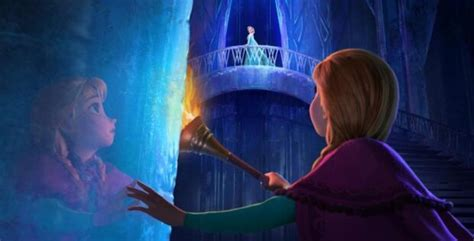
That's a specific, slanted take on the story, I know. It is, however, a retelling that does not mention by name the anti-hero of the story: Elsa. Hans is a bad guy, no doubt, but Elsa is the anti-hero who is spun to be a victim of her own ignorance and just as hungry for love as her little sister. Much like Jack is only trying to save his family, or he never would have robbed (or killed) a giant.

Anti-heroes have their place in story-telling. Sometimes they are necessary because nothing else will work for a story. In spinning a tale so that the anti-hero “gets better,” the author runs the risk of doing something scary: normalizing evil. Jack makes it okay to steal, as long as the victim is already bad. Elsa makes it okay to neglect loved ones, as long as the intent is to protect. The more normal any evil becomes, the farther an author has to reach to find a new edge to that envelope he/she is pushing. Violence, abuse, and outright horror become increasingly gray areas for the reader, the more excuses the writer provides.

Young writer, use your anti-heroes with care. How you weave a story is between you and your conscience, but have a care for what it will open inside the reader. Some of the thoughts you put in your reader's head cannot be unthought.

Keep in mind, Jack isn't all bad. There are sweet and delightful variants of the story, full of his pluck but without his kleptomaniac tendencies. But that's a story for another day...

Monday, April 8

Twelve Dancing Princesses and...


Oh, my good Lord! Where are my manners? To talk about fairy tales and archetypes and various aspects of the writing craft—like plot or backstory—and then NOT mention point-of-view. What was I thinking?

So sorry. On to a proper story...

Part of the wonder of a fairy tale—whether it is oral or written—is in the perspective of the narrator. Rarely is the audience given the impression that a key member of the cast is the one telling the story. This allows the narrator to freely move from place to place, from character to character, without disrupting the framework of the tale. In “Snow White,” for example, we pay a few visits to the Evil Queen's private chambers to see her with the mirror, the huntsman, and the witchcraft—even though Snow White never stops being our protagonist.

Now, not all fairy tales bounce between the good guys and the bad guys. “The Twelve Dancing Princesses” is one of many stories that follow the fairy tale recipe of opening with the problem, then following the hero (or heroine) as he (or she) solves the problem. In modern story-telling, this technique is frowned upon, because writers are encouraged to be consistent in their point-of-view. (Unless they have a well-established fan base, as many a beginning author may complain.) To begin with a clear, consistent pattern of following the actions and thoughts of one (or a select few) character. Omniscient point-of-view has fallen very much by the wayside these days.

Not always a bad thing. But sometimes limiting, especially for fairy tales.

To pick apart point-of-view, there are any number of stories we could be using. What works about “The Twelve Dancing Princesses” in this case is how the story teller keeps secrets from the reader. We uncover the mystery and see its resolution in time with the soldier of fortune hero. Not in time with the angry princesses' reactions, or the king's desperation. And, we have the added bonus of seeing the characters' actions, not their thoughts.

Before I delve into point-of-view, its uses, its powers, and its limitations, you might take a little time to examine this story. How might you tell the story differently if you could only choose one point-of-view? Try once through the soldier of fortune's eyes, once through at least one of the princesses', and once through the king's. A different perspective might force you to restructure the story, so don't be afraid to move events around or create extra ones as needed. A different point-of-view, after all, means working with a different set of information. What's in the omniscient point-of-view is only one version of the truth...

Best of luck! 

Monday, April 2

The White Snake and...

“Once upon a time...” there lived a fair maid. Or a pampered princess. Or an out-of-step girl. To date, every story we’ve discussed all have one thing in common: female protagonists. According to the world population—and the most likely candidate to tell a nursery story—we should not be surprised. If more than half the world’s population is female, and the author of a story MUST choose a central character, then it follows that the majority of fairy tales should star females.
Happily, they don’t always.
Some of the most interesting fairy tales are “soldier of fortune” stories. The main character is generally male, often poor or footloose, and looking for adventure. Or whatever comes his way, to quote an old 70’s song. “The White Snake” is one such tale.
Some stories, when read in their entirety (instead of the chopped-off summaries I provide), are meant to be told aloud. Again, this should make sense. Many old stories were passed down orally, by people who had neither time nor education to learn to read. To help the teller’s memory and the audience’s participation, these stories frequently have a trademark rhythm. Events, or speeches, happen repeatedly in cycles that are easy to remember and mimic.
Now, The White Snake would be memorable even without the rhythm of questions and offers. Even without any names in the story, this is a tale you could pick out of any line-up in any suspicious editor’s office. The frame of the story is not so amazingly unique that it could never be mistaken for anything else. Why, then, could the reader always identify it?
There are specific elements of the story that make it unique—if only for the order in which they happen—but more on that next time. Ponder some stories you know that feature boys (or men) who are strong, smart, and in search of a home. Can you think of a lot, or only a few? Especially in certain genres, these male characters may not be the central protagonist, though they often appear as heroes in certain female fantasy genres.
If we don’t read a lot of this kind of fairy tale, then why do we find so many soldiers of fortune in our modern stories?

Tuesday, February 21

Rapunzel and...


There once was a fair maiden, imprisoned through no fault of her own... Very appealing concept. Many aspects of the “Rapunzel” story work for the human imagination. The girl must be beautiful. The witch must be evil. Whoever saves her must be a prince. It’s a story that readers easily invest themselves in, letting their imaginations trot cheerfully alongside the plot. If the story takes an unexpected turn, the reader doesn’t balk.

Why? This is a story with thin spots. And places where readers really should think for themselves. What’s the deal? How is it that centuries of perfectly sensible people would tell and retell this story? Snow White had helpless innocence going for her. Cinderella had that persecution thing down pat. What does Rapunzel have?

Rapunzel has a set of parents who make poor decisions—both for themselves, and for their child. Sad, but true. What else? Rapunzel has a witch—who, by default, must have wicked motives at heart. What kind of mother imprisons her child? (Parents of teenagers, feel free to chime in...) Rapunzel has a prince—who must be young and handsome. Who wants her tower breached by a slobbery old guy? And Rapunzel has a fair maiden—who needs to be rescued.

This is a story that’s been rewritten a time or two, especially in recent times. (Disney princess, number 10) Certain elements of the story stay in, others are inevitably changes. Usually to make Rapunzel more of a “go-to” girl—someone who does more herself, instead of waiting for a savior.

And yet...there are other aspects of the story that are impossible to sweep under the rug, toss out the window, or tastefully erase. Perhaps because the writers aren’t paying attention, but also perhaps because the reader wants these aspects in the story.

Flawed characters.

This, I suspect, is where Rapunzel gets its mojo. The prince may be young and he may be charming, but nobody ever said he was perfect. Rapunzel herself isn’t the pristine, innocent girl found in many of the commonly known fairy tales. Most fairy tales center on characters placed in a set of circumstances. This is a story about characters who generate the plot, instead of being taken over by it.

More on this later, but can you think of stories with characters who make their own trouble? Where the story hinges on the characters putting themselves in sticky situations, even if for the right reasons?

Friday, February 10

The Six Swans and the Good Guys

Where last we left our heroine, you had her pinned up a tree and were preparing to deconstruct every bit of fun out of her. All without her saying a word. I hope you had fun.
You may have come up with different character traits than what follows. That doesn’t make you wrong. With any written work, a lot of different ideas can be extrapolated from a character's words or actions. Not all of them can be reasonably supported by the whole text. But just because one person presents an argument, that doesn’t mean you can’t come up with a different, equally sensible one.
Because the readers meet the princess first, let’s begin with her. As a protagonist (another ancient Greek theater term, meaning “one who plays the first part” or, more simply, “the chief actor”) is the character that the author most wants the reader to identify with, it makes sense to give more of the princess’s back story. Of course, since she will not have a speaking part for most of the story, the reader needs good reason to cheer for her.
First off, she is good. Modern audiences often put down the “old-fashioned” idea that a main character must be a good guy. This princess, however, has words and actions that support this label. In the beginning, when she knows something bad lives in her home, she flees. Fear is a perfectly good reason to run, of course, but we would think her foolhardy and craven if she stayed. There comes a time, both in stories and in life, when a good guy must get out of a bad situation.
But she isn’t just running away. The princess is looking for a way to save her brothers. This is important, because what she’s not doing is looking for a way to defeat her stepmother. She’s not dwelling on the evil that has infiltrated her family—she’s just focused on rescuing the innocent. To obsess over the stepmother would allow that toxic woman to have power in her life. No, thank you. All of these actions and choices demonstrate her goodness, and set a foundation for the reader to like her as she foregoes speech.
Second, she is diligent. The princess searches for her brothers until she finds them. Then she takes up the very difficult task of making cloth from nettles. (The full-grown weeds have a woody stem, filled with long fibers that can be dried and woven like linen. It makes a cloth that is thinner than silk.) And she sticks to her task until she finishes. Someone reading this can simply scoff at the idea of setting a heroine to an impossible task (like silence), but this girl is persistent. She keeps at the work until it is done. In Germanic culture, industriousness is a very valuable character trait. Making it praiseworthy in a story is a natural part of a fairy tale.
Lastly, she is faithful. This ties in with both her goodness and her diligence, but it is demonstrated more the further into the story we read. She does not have to choose to save her brothers. Having taken up that cross, she tells no one what she’s doing. When she marries the king, she could abandon her project. But she doesn’t. When her mother-in-law brands her a witch, a few words would free her. But she stays the course.
And her husband, to whom she has never spoken, seems to recognize these qualities without knowing her back story. In a lot of the well-known fairy tales, the hero and heroine are not well-matched. The reader knows a lot more about one character than another, and what is learned of these characters isn’t always detailed or particularly deep. Not in this case.
First off, the king is honorable. This is not a given in fairy tales. Some princes are not as charming as we assume. However, this time we have a winner. When the king finds the girl alone in the woods, nothing suggests she is a rich princess. He never looks for her family or father, so we can assume he had no reason to do so. But when he takes her home, he marries her. No one is holding a gun to his head on this decision. He could have locked her in a tower somewhere, without marrying her. (Yes, that happens in some fairy tales.) She did nothing to encourage his pursuit of her in the forest, but he gives her a home and the protection of his name. This indicates he has a deeply ingrained code of ethics that help make him a worthy leader. 


Second, he is just. This is also a quality that shouldn't be assumed. Plenty of people, be they leaders or small fry, will duck responsibility if they don't like the consequences. When his wife is accused of witchcraft, the king puts her on trial. He's not doing this to punish her for her silence. The law of the land demands it, and this king is not going to ignore the law or abolish it just because he doesn't like it. There are a lot of modern...let's call them "celebrities" (some hold elected office, some are appointed by elected officials) who do not exhibit this character trait. Whether by choice or by ignorance. However, here we have a king who serves his laws, rather than a man who uses the law for his own gain. 


Lastly, this king is loyal. This element of him is more personal and complements the princess's character very well. When he imprisons his wife and puts her on trial, he sits with her in the dungeon every day, asking her "What happened?" Nowhere in the text are we given the idea that the king believes the charge of witchcraft. But he does not abandon his wife just because she's in trouble. He has chosen a wife whose history and priorities he doesn't know, but he doesn't leave her when her loyalties are tested. 


Like I said, this fairy tale is one of my favorites. (Clearly, I can blather on and on about it ad nauseum.) If you're going to read fiction, it should leave you better than when it found you. Later on, we'll dive into bad guys and other modern conventions, like making bad guys protagonists or writing flawed characters. Useful, realistic even, but not always uplifting. 


But that's a story for another day...

Tuesday, February 7

The Six Swans and...

All right, on to the good stuff. Yes, I’ll come back to Ruth. Yes, I’ll do more with Cinderella—particularly this neat American Indian version I came across. However, I love the out-of-the-way fairy tales. This is a particular favorite.
Not because it puts me in the role of a story-teller. (If I’m going to rattle on and on, wouldn’t it be better to tell a story of my very own?) No, “The Six Swans” has a magic that is deeper than witchcraft and better than a warm fire on a cold night. But it is important to use the early Grimm’s edition of this story. There are variants with three brothers (The Three Ravens), or even twelve (The Twelve Brothers), but these versions lack the powerful writing tools hidden in The Six Swans. Even in the short version posted here, what makes this story spectacularly useful is still easily obvious.
Betcha didn’t even notice, did you? That’s ok. You kind of have to know where to look.
See, the beauty of “The Six Swans” isn’t in its archetypes, or its formulas, or any of the handy-dandy guidelines storytellers are encouraged to study. This is a fairy tale with sympathetic characters. The reader wants to love the princess, and is easily persuaded to do so. The reader wants the young king to be charming, and is given no reason to think otherwise of him.
We would love the princess if she were saving three brothers or twelve—or even one. It would be...well...wrong...of a reader NOT to love a character willing to sacrifice for someone else. Saviors, whether they succeed or fail, are easy to cheer for. The king’s character becomes stronger and sweeter, the deeper into the story we go. At first, he could be any good guy in any fairy tale. As the story begins to take some serious turns, though, he blooms into something more serious himself.
Not being very specific, am I?
That’s because I want you to take a stab at this one. You can look up another version online, though I’m old-fashioned enough to recommend an actual book. Read this story, study these characters. There are unique qualities to the two main characters that make them easily remembered and eminently worth taking with you. Home from the library, or incorporated into the baggage of your soul. Look, and you will see what makes them “good guys.”
Yes, of course I’ll have an answer Friday. Doesn’t mean you can’t analyze some characters yourself...