Showing posts with label POV. Show all posts

Thursday, February 19

Jack's Beanstalk of Anti-Heroism

Beans are a magical fruit, as the immature song tells us. Full of protein and complex carbs, they can be used in anything from a simple appetizer to a hearty soup—even a delicious brownie. And while they're easy to grow, none are as cool as Jack's. They're his ticket to a new life. Without the gimmick of his magic beans, Jack would still be a down-on-his-luck farmer's son.

Or the village criminal, who sneaks in through your back door to “borrow a cup of sugar.” Your call, young writer.

Jack needs the beans, though, to make his story work. Most fairy tales can be told without the magic. Countless revisions of classic favorites attest to that. Jack without his beans equals a kid with his hand in the cookie jar. If he's going to sell anyone his ocean-view resort in Nebraska—I mean, his story about how a nobody broke into a fabled, wealthy kingdom—he must dazzle the audience.

If Jack were to simply say that his family needed the money and he took up a life of crime to help his ailing mother, it would read more like the Michael Keaton crime spoof Johnny Dangerously. Funny, but still wrong. And Jack wants your good opinion, so that's not a venue that works for him.

A recent story that mimics Jack's story pretty well is the film 21. Our Jack, Ben, is asked to “dazzle” a prospective employer in an interview, so he spins a tale. He is a wanted criminal, who pinned all his crimes on the man who first dragged him off the straight-and-narrow. A double life, between his normal life at MIT and his wild one in Vegas. A beautiful girl out of his league. A twist at the end, as Ben works to outsmart powerful con men.

And all the cooler, because it's a true story.

Anti-heroes have been making the rounds a lot in current fiction. Some writers think “good guys” are boring. Some writers think there's no such animal as a genuinely good person. Some writers identify more with the antagonists. All of these writers must then jump through hoops to convince the reader to side with their anti-heroic protagonists.

This is where your spin control comes into play, young writer. You are not required to make a protagonist all good. Nor must you trick your reader into loving an anti-hero. But you should be well aware of what you are doing, and know what tricks are at your disposal.

Human nature can be deceived by looks, so if you have a man who is rich and good-looking, your reader will excuse him for a multitude of sins. Yes, really. The Harry Potter fans who love Draco Malfoy. The girls who swooned over a certain sparkly vampire. And even the Jews, who wanted a human king instead of divine governance, who liked Saul for his great height and mafia-like family connections (I Samuel 9 and 10).

If wealth and looks seem too cliched a way to sway your readers over to the side of your anti-hero, you can put Stockholm Syndrome to good use. This has become a common practice in post-modern story-telling, actually, so don't fear that this will seem far-fetched for your readers. It's a fairly simple process:
1. Capture your reader. Hook the audience on the absolute importance of finding out what happens next. This can occur almost instantly, or it may take a long while. Don't rush the process.

2. Hurt your reader. Whether this is accomplished by harming other characters or by writing a foreign worldview is up to you, but the reader needs to be intimidated and hungry for an emotional connection.

3. Make your reader vulnerable. A desire for an emotional connection is a good start, but it's not enough. The reader needs to open up and share in the hopes that the anti-hero will care. Characters in the story who have been victimized by this character can share their fears, pasts, or dreams in order to facilitate this step.

4. Hurt the reader again. Perhaps there is a misunderstanding, or perhaps the anti-hero hears the sob story but responds in an unexpected way. The vulnerability needs to be reinforced by more damage.

5. Share a little. The anti-hero isn't all bad, and here the reader learns about his abusive childhood or the trauma of prison. One piece of information, painting the anti-hero in a sympathetic light, will attach the reader to him. Or her, if you happen to be writing an anti-heroine.

6. More pain and/or violence. But this time, the characters who have been victims of the anti-hero are now fighting alongside their captor. The reader should be swayed enough to want to defeat “the real villain” rather than escape the captor.


If this sounds cruel or manipulative to you, GOOD. It should. Harming and tricking innocent people takes a lot of work and a certain amoral bent. Modern stories are often developed along these lines, and it has normalized a lot of dangerous behavior in popular culture and fiction.

If you've seen Disney's Frozen, echoes of this can be found in the film. Anna is the fun little girl who wants to play with her sister. Who hurts her. Yes, it's unintentional, but that only increases the audience's sympathy. Anna grows up cut off from her sister, starved for affection and attention. Her sister explodes with icy sorcery, stomping on Anna's fledgling romance and rejecting both family and kingdom. Anna chases her, only to have her sister hurt her again. Anna is desperate to be healed and be loved, and her race home reveals unwelcome news: her sister was right to doubt Anna's suitor. (Anna is unaware of her sister's imprisonment and fears for the family, though the audience is kept up to speed.) Freshly sympathetic to her sister, Anna would rather die defending her than break free of her sister's spell.
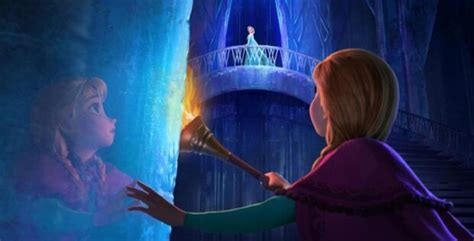
That's a specific, slanted take on the story, I know. It is, however, a retelling that does not mention by name the anti-hero of the story: Elsa. Hans is a bad guy, no doubt, but Elsa is the anti-hero who is spun to be a victim of her own ignorance and just as hungry for love as her little sister. Much like Jack is only trying to save his family, or he never would have robbed (or killed) a giant.

Anti-heroes have their place in story-telling. Sometimes they are necessary because nothing else will work for a story. In spinning a tale so that the anti-hero “gets better,” the author runs the risk of doing something scary: normalizing evil. Jack makes it okay to steal, as long as the victim is already bad. Elsa makes it okay to neglect loved ones, as long as the intent is to protect. The more normal any evil becomes, the farther an author has to reach to find a new edge to that envelope he/she is pushing. Violence, abuse, and outright horror become increasingly gray areas for the reader, the more excuses the writer provides.

Young writer, use your anti-heroes with care. How you weave a story is between you and your conscience, but have a care for what it will open inside the reader. Some of the thoughts you put in your reader's head cannot be unthought.

Keep in mind, Jack isn't all bad. There are sweet and delightful variants of the story, full of his pluck but without his kleptomaniac tendencies. But that's a story for another day...

Monday, January 26

Jack's Beanstalk and ...

When it comes to unique fairy tales, not every nationality has a recognizable trademark. Little Red Riding Hood could happen anywhere. Snow White can't even be claimed by the Brothers Grimm, because the Italians, the Arabs, and the Scots all have multiple takes on the story. Cinderella is best known by the French version, but literally every culture has one. But the English can claim sticky-fingered Jack for their own.

One of the amazing aspects of Jack's story is the very subtle narrative. Jack is young, poor, and not-so-clever. But he is anxious to prove he is quick-witted, at least. The fascinating thing about Jack's adventures up in the sky isn't that they happen. It's that you, young writer, believe this repeat offender when he goes back and steals from the giants. Again and again.

Jack's MO is normal for thieves. If they find a weakness someplace, they will come back and steal again. Just like Jack did. But we excuse him for it, snookered by this notion that he had a family to feed, an astonishing bit of luck in being tricked into buying “magic beans,” and the ultimate whopper of justified revenge. There is always an excuse.

This story is swallowed so completely, especially when we're kids, that we never question whether the narrator is telling the truth.

But why would he? He admits to stealing. Why doesn't the reader wonder if that was his only fault in the tale? Oh, he's plucky. Imaginative. Charming. Altruistic. He's Robin Hood with beans and giants and harps—oh my.

Don't get me wrong. I love a good fairy tale. But Jack's adventures have more in common with Rapunzel than with Cinderella. He's not as innocent as we like to imagine.

How would another character—a disinterested third party—tell the story? Would they side with the giant? Would they know more about where the beans came from? We've spent some time on point-of-view already, so I'm not asking about that. Jack spins the story, though, so that he comes out smelling like roses. It's Midnight in the Garden of Good and Evil. He's the guy who got away with murder, and this is the tall tale he passes around to convince everyone that he did the right thing.

As writers, we learn about protagonists and antagonists. Good and bad. How to give one character a little of both sides. And then we get a “modern” idea—let's have an anti-hero. No one's ever made a bad guy the protagonist, so I'll be the first.

Nyeh—more like the seven hundred and third. If Jack could convince you that his beanstalk was fated justification, perhaps anti-heroes with a gift of gab have existed before.

If you were to make an antagonist the hero, would you convince your readers of his courage? Jack's not written without flaws in the beloved children's tale, but the story defends him at every turn. How would you write an anti-hero, young writer? Would your readers see any of his faults, or would he be more like merry ol' Jack?

Monday, October 13

Twelve Dancing Princesses and a Steamroller

As time winds down, we are left with one last perspective to examine for our besieged father and his stubborn girls: the successful candidate.

Even though this story is a fairy tale about girls who dress up and go dancing every night, the soldier-of-fortune's perspective is the easiest and most familiar choice for a single point-of-view. Of all the people in this story, he is the only dynamic character. (Read here for more on static and dynamic characters.) Nobody else changes. And even the soldier-of-fortune's “change” can be debated.

He is, unarguably, the most interesting of all the characters in the story. Everyone else is stuck in a rut, only digging themselves in deeper with every revolution of the broken record of their lives. The king's tied hands. The eldest princess's schemes. The youngest princess's fears. The soldier-of-fortune at least shakes things up.

As writers, these are the characters we prefer to write about. J. Alfred Prufrock doesn't eat that peach, after all. Walter Mitty's active fantasy life never changes anything (original story, not the recent film). Thoreau, for all his abstract optimism, left Walden Pond because the work of living interfered with his writing. He wrote about the time there, not about his decades of mooching. Brilliant writers may write about “everyman” and his indecision, but most writers and readers would rather follow the adventures of a “doer.”

Just because you, young writer, are telling a story about active conflict does not mean that your character must be active, extroverted, or loud. All of these character traits make for an interesting journey, certainly, but none of them are necessary. What your dynamic characters do need, however, are small OODA loops.

No, I'm not just making this stuff up. Silly rabbits. John Boyd of the US Air Force developed this cycle—Observe, Orient, Decide, Act—to help people find a way to quickly move forward in a situation. Making good use of this concept does require someone to know what information is important and what should be done about it, which takes study and practice, but a strong dynamic character should not be sitting on his hands. Hopefully, he is busy making good decisions, but dynamics are not just about internal changes like a heart growing, or a vengeance coalescing. Dynamic characters need to be functional in active conflicts, too.

For the soldier-of-fortune, his external GMC is easy to spot. Makes good use of his own OODA loop, too. Goal: solve the mystery. Motivation: new job title/NOT getting his head chopped off. Conflict: active hostility from the princesses. Wonderfully straightforward.

The readers' trust in his ability to handle these physical conflicts is based on the internal conflicts he first handles with efficiency and kindness. When he meets the old woman, he does not hesitate to help her. So when her response is to provide him with the wisdom and the tools to take on the princesses, the reader is not surprised that he accepts the help quickly and moves on to his next challenge. Each decision the soldier-of-fortune must make is done with a minimal of dithering. Very small OODA loop for our hero.

Writing from this perspective doesn't require you to study military strategy. The soldier-of-fortune, however, doesn't come with a lot of internal conflict. Writing him with inner demons means dragging out the story, but it also lengthens that OODA loop. Which means you're now writing a different story. Young writer, feel free to write the story on your heart. But let your characters be true to themselves. Not only to the things you already know. You don't have to research yourself to death when writing someone or something new, but making it real is worth the time and effort.

Let your men be men. Soldiers who doubt themselves don't survive long on the battlefield, so they learn to either ignore their internal issues or resolve them to the individual man's satisfaction. Ignoring an unresolved issue can lead to a whole host of other problems, of course, but that's a story for another day...

Saturday, June 7

Twelve Dancing Princesses and a Benched Father

There are those who would argue that a fairy tale without omniscience and situational irony is no fairy tale at all. Oh, please. Those are elements that make the reader feel safe—high above the events of the story, so to speak—but they are by no means required. We can still have the wonder and truth of a fairy tale when one clueless narrator hangs on for dear life.

Stories like this one.*

If you sat down to rewrite the Twelve Dancing Princesses from the king's point-of-view, not much of the plot needs to change. You still have a man with a problem, an impossible solution, and an unlikely savior. But in some ways, the king's point-of-view is the most familiar to beginning writers.

In becoming writers, we must begin to observe human interaction. To see new characters, to find different relationships, to explain the chaos in our corner of the universe. For most of us, this kind of watchfulness is no hardship. Being either introverts or antisocial (really, the two are different), we easily settle onto the sidelines and record our understanding of reality. We see patterns, try to predict or even deflect them, and all this time on the bench gives us both a kinship with outsiders and a desire to govern our story's universe a little better.

And while that desire to play God comes out in the king's reactive behavior, we writers must still face the fact that armchair coaches live vicariously. Someone else makes the play, says the line, gets the girl—and our dependency on those outside forces keeps us safe from the risk of failure. Most fantasy depends on a certain amount of this laissez-faire approach. Merlin from the King Arthur legends, who knew everything and served as an advisor and kingmaker. Bob Balaban's character from Close Encounters of the Third Kind, who could put all the information together but was neither a brave explorer nor a passionate scientist.

NONE of this is to say that we observers cannot write adventures, myths, or extroverted characters. But when writing from one point-of-view, the author moves into the action. To be part of a scene, a story, and adventure is to miss other parts of life around you. The moment we shift from the sidelines to the play, we cannot see everything. Telling this story from the king's point-of-view, he misses the nighttime adventures. He sits and waits, through one failed suitor after another, and that perspective needs to be respected.

The motivations for an armchair perspective need to be justified, of course. Mourning is believable. The king has lost his loving queen, and perhaps all hope of generating his own son to inherit the throne, so his out-of-control daughters become a believable consequence of his retreating from the field of play. The conflict is pretty straightforward, too. Someone else is making the trouble, and their mess has become his problem. That perspective neatly sidesteps any personal responsibility.

Part of the wonder of a realistic point-of-view, paradoxically, is that it isn't always based on reality. Your narrative character need not be crazy to be out of touch. He could simply only see the world for how it serves him best. A fresh pair of eyes might change the way he sees things—but that would require him to listen to outside sources. Some blinders are put on people by parents, circumstances, education, or beliefs, but some of these blinders are voluntary.

Trickier to define for this benched dad are his goals. Solving the riddle of his daughters' night life is only temporary. Finding a successor addresses his country's needs, to be sure, but not his own. What kind of personal goals would you give this man? Does he need a healed heart? A new purpose in life? To lay to rest old ghosts? The further to the side this kind of character lives from the story's action, the harder it is for a writer to develop and communicate these goals.

Keep in mind, young writers, that a well-rounded character needs to be more than the events you set in your story. He needs a whole life—complete with unanswered questions, strengths and weaknesses, and motivating goals. Not just motivations from the past, but intentions about the future that fuel his decisions.

Even if he's introverted.

Even if he's anti-social.

Even if he doesn't have the starring role.

Even if he reminds you of yourself.

Don't be afraid to think in different directions for your characters. How a character thinks may not be how a story ends up, but the whole of a soul should be represented on the page. This is harder to do when a character has a fundamentally different nature from the writer's, but even more important. Whether writing ourselves or wish fulfillment, we can be real and true with our unique characters.


*I'll only do that once, I promise.

Sunday, April 21

Twelve Dancing Princesses and Too Many Girls


I first was going to address this exercise as three answers to one question, but each answer deserves its own essay. (Plus, we are experiencing technical difficulties here at the hidden hut...) So, for today, just the ladies...

If you attacked “The Twelve Dancing Princesses” from a girl's point-of-view, you face the immediate problem of “Which girl?” Eldest sister? Youngest? Since the eldest is the one who marries, she's the most likely candidate. We'll call her Donna.* Reading this as a youngster, I always identified more with the youngest sister, who gave warnings no one heeded. We'll call her Cassandra.** You could do either, but the objective is to keep the POV in just one head.

Hope you chose wisely. 

In writerly circles, much is made of a character's GMC. Sadly, this isn't a car. It's short for “Goals, Motivations, and Conflict.” The idea being that each character has goals (or needs them), is motivated by something (externally or internally), and struggles with a conflict (which must be resolved). I'm not crazy about using this from a writer's perspective, but it is useful from a reader's perspective. (Why don't I like it for writers? Because in my limited experience, it leads to cardboard characters. I like my people on the page to move freely, and that requires more than this checklist.) Whether you're seeing through Donna's eyes, or Cassandra, it should be clear in the writing what her goals, motivations, and conflict are.

For Cassandra, these are easier. She wants to have a good time (she exhibits considerably less rebellion than, say, Donna)—check, Goal. She is prodded by her sister to “get with the program” (external prodding, rather than her own internal compass)—check, Motivations. She tells her sisters the truth, and they don't believe her (the classic “I told you so” mantra)—check Conflict. This doesn't make her interesting, though. If you wrote from her perspective, I expect she had memories and relationships and personal desires that conflicted with her sisters' plans for a night out.

For Donna, your choices would take her down a different path. Since the end result of the story is her marriage to the soldier-of-fortune, it is tempting to make this more of a romance than a straight forward adventure. But to wind up “happily ever after” with someone she has been plotting to kill, this creates some conflict for the writer. Not for the reader—because, let's face it, she deserves to wind up with someone who can outsmart her. But from a writer's perspective, trying to get inside Donna's head, it is important to see the events of the story through her eyes. Without the benefits of foreknowledge or omniscience.

Donna's goals? To get out of the house! (Honestly, if you had eleven younger sisters, and none of you were married, the chafing to run your own home would be burning by now.) If she can't get married, she'll get jiggy with it.

Donna's motivations? Here, you must decide on rebellion, boredom, or anger. Each primary emotion would fuel a different line of thought, a difference course of action. If you chose another primary emotion, do make it real for the reader.

Donna's conflict? Whether tis nobler to stay a child in her father's house, or accept one of the fools who take up his offer to solve the riddle. Of all the princesses in this tale, she is the one with the power to end the shenanigans. And she never does. Up until the bitter end, she takes the girls out every night. Why? She clearly wasn't overly attached to any of the fellows she and her sisters partied with every night.

These questions and answers don't address every aspect of how to rewrite this story from a lone female POV. But, in addressing the chosen narrator's feelings, decisions, and actions with her GMC in mind, the story should take on a little more drama.

Shelley Duval's Faerie Tale Theatre took a condensed version of the story, available here:

Much more recently, Mattel's Barbie rewrote the story with affectionate sisters, a stepmother, and a legitimized reason for the dancing:

Next time, Daddy dearest will take center stage...


* Why Donna? “Prima Donna” is Italian for “first woman,” and is often used to either describe a principal character or a diva who demands a spotlight at all times.

**Why Cassandra? In Greek mythology, the god Apollo gave Cassandra foreknowledge in exchange for her favors. When she did not give him her love in return, he cursed her to never be believed when she prophesied.  

Monday, April 8

Twelve Dancing Princesses and...


Oh, my good Lord! Where are my manners? To talk about fairy tales and archetypes and various aspects of the writing craft—like plot or backstory—and then NOT mention point-of-view. What was I thinking?

So sorry. On to a proper story...

Part of the wonder of a fairy tale—whether it is oral or written—is in the perspective of the narrator. Rarely is the audience given the impression that a key member of the cast is the one telling the story. This allows the narrator to freely move from place to place, from character to character, without disrupting the framework of the tale. In “Snow White,” for example, we pay a few visits to the Evil Queen's private chambers to see her with the mirror, the huntsman, and the witchcraft—even though Snow White never stops being our protagonist.

Now, not all fairy tales bounce between the good guys and the bad guys. “The Twelve Dancing Princesses” is one of many stories that follow the fairy tale recipe of opening with the problem, then following the hero (or heroine) as he (or she) solves the problem. In modern story-telling, this technique is frowned upon, because writers are encouraged to be consistent in their point-of-view. (Unless they have a well-established fan base, as many a beginning author may complain.) To begin with a clear, consistent pattern of following the actions and thoughts of one (or a select few) character. Omniscient point-of-view has fallen very much by the wayside these days.

Not always a bad thing. But sometimes limiting, especially for fairy tales.

To pick apart point-of-view, there are any number of stories we could be using. What works about “The Twelve Dancing Princesses” in this case is how the story teller keeps secrets from the reader. We uncover the mystery and see its resolution in time with the soldier of fortune hero. Not in time with the angry princesses' reactions, or the king's desperation. And, we have the added bonus of seeing the characters' actions, not their thoughts.

Before I delve into point-of-view, its uses, its powers, and its limitations, you might take a little time to examine this story. How might you tell the story differently if you could only choose one point-of-view? Try once through the soldier of fortune's eyes, once through at least one of the princesses', and once through the king's. A different perspective might force you to restructure the story, so don't be afraid to move events around or create extra ones as needed. A different point-of-view, after all, means working with a different set of information. What's in the omniscient point-of-view is only one version of the truth...

Best of luck! 

Tuesday, October 16

The Devil, Three Golden Hairs, and Some Just Desserts

The great question, when writing one of these, is how much do I assume you've read of the story in question? If I assume none, then I have to rehash the plot. Which bores some people (like me). If I assume all, then I completely skip the plot and trust you to zip ahead with me. Which frustrates some people (who need the structure of the plot). Here's to hoping for a happy medium...

As I mentioned in the last post, the ending of this story is astonishingly satisfying. To get there, however, we do have to trudge the path of the plot's build-up and resolution. Why? Because we, the readers, are in on the dramatic irony of the story. (This means that the reader has more information than the characters.) Often used in omniscient storytelling, dramatic irony gives the reader insight or feelings that the characters themselves lack. In this case, we build up a particular set of feelings towards the king. 

As the antagonist of the story, it is hardly surprising that the king inserts himself early in the story. And tried to kill a helpless baby. Honestly, who's going to love the king after that? In an astonishing show of grace (or fate), the babe survives and grows up to be an admirable young man. Fun, hard-working, lovable, and outgoing, our hero is destined for great things. (Thanks to dramatic irony, we knows of the midwife's prophecy about the child, which only one other character knows about.) 

When the king returns and sets up the hero to be executed, we're already primed to hate the king for this. It is no hardship to cheer the boy and his unexpected friends and helpers along the way, but the king's long shadow hovers over the story. Whatever will become of a good boy who is hunted by such a ruthless jerk? 

The boy then goes on his adventure through the forest, once again propelled by the king who wants to kill him. On the one hand, shouldn't the king get the message that this boy cannot be murdered by indirect means? On the other, however, is our hero going to have to arrange for his own father-in-law's death? Let's hope not...

In the end, however, it is the surprising twist of how the hero handles the king that we find so satisfying. We like that he doesn't stoop to killing the king. We like that he is never faced with the truth of how many times the king tried to do away with him. We like that the king, instead, is punished by his own actions. The boy has only to make good use of the king's greed. 

Parts of this story are found in a lot of modern stories. Especially ones written with boys in mind for an audience. The appeal of outsmarting a devious opponent is universal. Jeffery Archer does it in books like A Matter of Honor or Honor Among Thieves, surprising his readers continually with good, loyal characters who beat the bad buys at their own games. Some modern authors beat the bad guys by destroying the game. Break the rules so badly that the game can never be played again, or kill the one character who makes the game work. (Hunger Games, Matrix trilogy, need I go on?) But as a good writer, how can you get your character out of this bad situation with some good character still intact? Killing a wicked character can feel good, but it's fleeting when compared to a story where good didn't just survive. Good triumphed. 

But that's a story for another day...

Monday, March 19

Beauty, the Beast, and...

Once there was a girl, so brave, so true, that her willingness to sacrifice herself for someone she loved changed the heart of a great and terrible beast. Who was actually a cursed prince. And then they live happily ever after. Yes, this one is an old, familiar tale.
Which some people I know like to argue is the most Christ-like of the major fairy tales, because of the sacrifice substitution. And some other people I know like to argue is entirely about limited opportunities and Stockholm Syndrome.* Clearly, Beauty and the Beast is one of those stories that depends a great deal on the reader’s point of view.
Sadly, I won’t be discussing point of view this week. When Alex Flinn’s Beastly became a motion picture last year, point of view (or POV, for short) suddenly became a relevant part of fairy tales. Mostly because she writes from unusual POVs (the beast, the ugly stepsister, and so on). It’s an interesting concept, but it’s better discussed with other fairy tales. Maybe later.
No, this week I want to focus on young Beauty. As a writer, you are sometimes left with the very serious decision of what to reveal in a story, and what to leave out. Beauty’s motivation in agreeing to the trade—herself for her father—is an easy one for a reader to trace. Had she thought about the permanence of this choice? What if the beast ate her? What if she lived for sixty years in prison, and never went home? What had she expected, going into her imprisonment?
There are some other places where Beauty’s expectations come into play, but that’s more a question for next time. (Ethics and themes and whatnot.) In the story, the reader is shown how Beauty stays brave and true, consistently turning down the beast throughout her confinement. But how—and when—does she change her mind about him?
What would her diary entries from this time in the story reveal about her plans for the future, her thoughts on the castle and her home?


*Stockholm Syndrome refers to a situation where a captive "falls in love" with his or her captor. This is a serious and dangerous psychological condition, usually accompanied by the captor manipulating the prisoner and forcing a false sense of dependency. Beware!

Friday, February 17

Red Riding Hood and an Alternate Ending

When last we left our heroine, she was about to judo-chop the wolf. Be honest—how many of you thought Hoodwinked was a valid rewrite? In that case, what starts as an awkwardly perky musical ends as a well-intentioned crime scene investigation. For fuzzy animals. Who love good health and happy endings. 


Moving right along...

How we—any author—rewrite a story like "Red Riding Hood" begins with perspective. Yes, it will end with an ending. Somewhere, out there. But first the question of the writer's preconceptions and understandings must be examined. 

A child who reads the story may come away thinking, "Wolves are bad. I shouldn't talk to strangers." A young woman who reads the story may come away thinking, "Wolves are bad. Where can I get one?" A grown woman who reads the story may come away thinking, "Wolves are bad. No child should even know they exist."

Unwholesome possibilities, to be sure. 

But a child who wants to rewrite the story will want characters like an interfering woodsman, a caring grandmother—someone to step in and FIX the story. If little Red is a girl in trouble, then she is a girl who needs to be rescued. Grown-ups should care enough about children to look out for them, right?   

Many modern retakes of the story involve, like the satire link last time, a girl who saves herself. Red knows karate, or brews her own pepper spray, or ties up the wolf and sells him for thirty pieces of silver. The "I don't need YOUR help" mentality makes for a very one-sided story, and will have a profound impact on what kind of options are available for an ending. 

I will not be discussing people who want to side with the wolf. That falls under the category of dark fantasy. It's not inconceivable to change the story to defend his point of view, it's just not something I want to encourage. Or, frankly, have time and space to do the argument justice. Maybe later.

In its purest, simplest form, this story is told from an omniscient point of view. This means that the reader sees what’s going on in every scene and is privy to the actions and thoughts of all characters. To choose a side—whether it is young Red or the wicked Wolf—is to shift the point of view. And in so changing how the story is seen, the author changes all possible outcomes. Before picking sides with the little girl, Grandma could have become the hero. Once the author decides to favor the child, though, the story must have an ending that satisfies the needs of the chosen character.

All this is not to say that bad creatures never star in fairy tales. I can think of several fairy tales that deal with people falling into blackest witchcraft and never coming out. But they don’t give the reader anything new to think about. And they don’t feed an author’s soul the way that a properly magical story should. Filling you with possibility, and imagination, and the fantastic union of shared imagination.

Which is why some authors keep coming back to the wolf and his red-caped prey. “Surely there must be a way to resolve this story in a matter that feeds me...”

And surely there is. But that’s a story for another day...